- For housebuilders and developers

Deliver Self-build and Custom Housebuilding as part of mainstream housing supply.

Blank Canvas gives housebuilders a practical way to deliver Self-Build and Custom Housebuilding (SBCH) especially as an integrated part of larger residential schemes.

It helps housebuilders meet planning obligations to provide allocated plots for SBCH through a defined, market-facing housing product that can be incorporated into the site’s density, housing mix, phasing, construction programme and sales strategy.

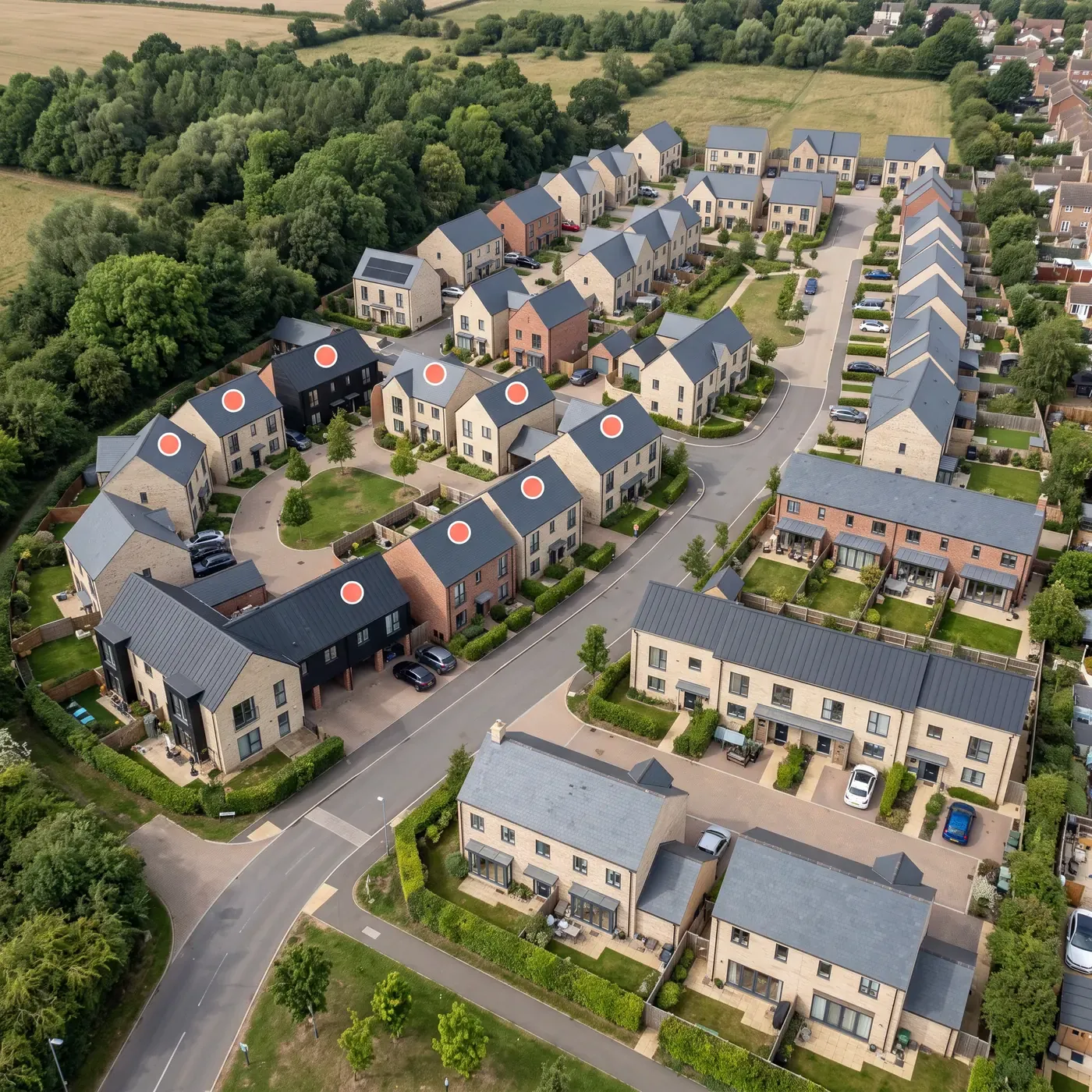
Illustrative residential masterplan showing Blank Canvas homes highlighted among detached, semi-detached, terraced and apartment plots within a larger housing development.
- The delivery challenge

Protecting land value, site control and the route to sale.

Housebuilders are increasingly required through planning permissions and Section 106 agreements to provide Self and Custom Build Housing within larger new homes developments. The obligation may be clear, but the conventional routes to delivering it can create significant commercial and operational problems.

If serviced plots are sold for individual buyers to design and commission their own homes, the cost of delivering each one can be materially higher than building repeat house types through housebuilders' established supply chains. Those higher construction costs reduce the amount buyers can afford to pay for the land, placing pressure on residual plot values and potentially making the SBCH allocation unviable. Appointing a project manager may make delivery easier for buyers, but the additional management cost further reduces the value available for the plot.

01

Protect residual plot value

Repeat house types and an established construction supply chain avoid the additional costs associated with individually designed and separately managed homes.

02

Retain control of the site

Housebuilders control design, procurement, construction sequencing, site access and health and safety through to the defined Blank Canvas stage.

03

Preserve the wider development

Blank Canvas homes can use the permitted house types, density and housing mix of the wider scheme, maintaining a coherent street scene after completion.

04

Create a practical exit route

Subject to the Section 106 release mechanism, an unsold Blank Canvas home can be completed and sold as a conventional new home without replacing the permitted house type.

The marketing period, release mechanism and ability to complete and sell an unsold home conventionally must be expressly supported by the site's planning permission, Section 106 agreement and delivery documents.

- The delivery model

A controlled housing product with meaningful buyer participation.

Blank Canvas keeps housebuilders responsible for the design and construction work it is best placed to control. The home is delivered to an agreed Blank Canvas stage using the site's approved design approach, house types, construction methods and programme.

Buyers have meaningful input into the home and completes the remaining interior around their own requirements. Blank Canvas supports the proposition, route to market and customer journey surrounding that division of work.

  1. 01
    Housebuilder control

    A defined construction scope

    Housebuilders retain control of the design, specification, external appearance, construction programme and site operations through to the agreed Blank Canvas stage.

  2. 02
    Buyer participation

    Meaningful personalisation

    Buyers complete the interior and, on suitable homes, may also be offered defined internal-layout choices before the relevant design and construction deadline.

  3. 03
    Blank Canvas support

    A structured route to market

    Blank Canvas helps shape the proposition, explain the product, market the homes, educate buyers and support the pathway from initial enquiry through interior completion.

Housebuilder delivery, buyer participation and Blank Canvas support form one connected pathway from the approved design through to interior completion.

- Mainstream site delivery

Designed for the way larger housing sites are actually delivered.

Blank Canvas is not dependent on isolated, low-density plots or one-off architectural commissions. It can be configured around suitable homes within the wider development, allowing SBCH provision to reflect the site's established design language, density, phasing and housing mix.

01

Aligned with site density

SBCH homes can be provided through suitable detached, semi-detached, terraced and apartment formats rather than being limited to large individual plots.

02

Integrated with the housing mix

The homes can use appropriate house types already designed for the development, subject to the planning permission, technical requirements and agreed buyer input.

03

Controlled within the programme

Housebuilders can retain control of construction sequencing and limit buyer-led changes to defined choices made before stated decision deadlines.

04

Relevant across price points

Using mainstream housing formats can make SBCH available to a broader buyer market and support delivery across a wider range of property values.

Housing formats

Illustrative diagram. The delivery structure and housing mix will be configured for the individual site. Blank Canvas homes may be provided through detached, semi-detached, terraced or apartment formats within the wider development.

- Planning and Section 106

A compliant model, configured for specific sites.

Blank Canvas is designed to provide housebuilders with a compliant route to delivering Self and Custom Build Housing on larger residential sites. It is not simply a marketing identity applied to a conventional new home. The model gives buyers meaningful input into the final design and layout of the property and responsibility for completing its interior.

Every planning permission and Section 106 agreement is written differently. Blank Canvas therefore engages with a project early, reviews the site-specific obligation and configures the delivery model around its definitions, conditions, actions, marketing requirements and release provisions.

Working with housebuilders’ planning teams, Blank Canvas will engage with the local planning authority and the project’s planning and legal advisers to explain the model, address any site-specific requirements and establish an agreed pathway through which the Blank Canvas homes can satisfy the relevant planning obligation.

  1. Stage 01

    Review the obligation

    Blank Canvas reviews the planning permission, Section 106 agreement and relevant policy context with housebuilders and their advisers. This includes the required number and type of homes, applicable definitions, delivery triggers, buyer eligibility, marketing periods, reporting requirements and release provisions.

  2. Stage 02

    Configure the compliant model

    We identify the appropriate homes, purchase structure, Blank Canvas specification and forms of buyer participation. We then define how the initial owner will have meaningful input into the home’s final design and layout and how that input will be recorded.

  3. Stage 03

    Engage and agree

    We work with housebuilders and their professional teams to present the proposed Blank Canvas delivery model to the local planning authority. We respond to questions, refine the structure where necessary and complete the actions or approvals required to establish an agreed route forward.

  4. Stage 04

    Deliver and evidence compliance

    We prepare and support the marketing, buyer information, personalisation process and evidence trail required by the agreed structure. We help monitor delivery, record buyer participation, report relevant activity and manage the process through any review or release mechanism contained within the Section 106 agreement.

The outcome

A clear and agreed route to satisfying the obligation.

Once the Blank Canvas model has been configured and agreed for the site, housebuilders have a defined SBCH product, an established route to market, a documented buyer-participation process and the evidence needed to demonstrate delivery against the relevant planning and Section 106 requirements.

Compliance is established against the wording and requirements applying to the individual site. Early engagement allows Blank Canvas, housebuilders, the local planning authority and the relevant advisers to agree how the model will operate before the homes are brought to market.

- Purchase routes

Sell the plot first. Or sell the home at Blank Canvas stage.

Housebuilders can choose the route that best suits their funding model, scale and construction programme. The principal difference is when buyers purchase the property and begins funding its delivery.

PLOT-FIRST

Sell the plot, then receive stage payments.

Buyers purchase the serviced plot and enter into an agreement for housebuilders to deliver the home to their defined Blank Canvas stage. Housebuilders receive agreed stage payments as construction progresses.

Why housebuilders may choose this route

Buyer finance supports construction from the outset. Where stage payments are aligned with build costs, this can substantially reduce housebuilders’ working-capital requirement and potentially make delivery to Blank Canvas stage cash-flow neutral. This can be particularly valuable to SME housebuilders.

What it means for buyers

Buyers may benefit from a lower SDLT liability because the initial purchase is the serviced plot, subject to the transaction structure and individual circumstances. However, development-stage finance is generally more expensive than a standard residential mortgage, and buyers may need to sell or leave their existing home earlier.

BLANK CANVAS-STAGE SALE

Build first, then sell at Blank Canvas stage.

Housebuilders retain ownership, fund construction and sell the property when it reaches their defined Blank Canvas stage.

Why housebuilders may choose this route

This route allows housebuilders to retain control of funding, construction and release. It may be better suited to larger or volume housebuilders that prefer to build several homes within an allocation together rather than deliver individual properties to order.

What it means for buyers

Buyers may be able to remain in their existing home until the Blank Canvas purchase completes, avoiding the need to fund or manage the main construction period. They will usually pay more SDLT than under a plot-first structure, but the purchase price may still be lower than that of an equivalent fully completed home. Buyers then fund and manage the remaining interior completion.

Finance availability, borrowing costs, SDLT treatment, ownership timing and the need for temporary accommodation will depend on the transaction and buyers’ circumstances. The arrangements for each development should be confirmed by the relevant legal, tax and financial advisers.

- Working with Blank Canvas

Your Specialist Partner

Blank Canvas works alongside housebuilders and their existing professional teams to turn the proposed delivery model into an agreed, market-facing SBCH product.

We help configure the model for the site, establish the planning and delivery pathway, prepare the homes for market, manage the customer proposition and support buyers through to completion.

  1. Stage 01

    Engage early

    We review the site, planning position, Section 106 obligation, housing mix, development programme and intended buyer market with housebuilders and their advisers.

  2. Stage 02

    Configure the model

    We identify the appropriate homes, Blank Canvas specification, meaningful buyer choices, purchase route, housebuilders’ delivery scope and provisions for homes that remain unsold.

  3. Stage 03

    Agree the pathway

    We work with housebuilders’ planning and legal teams and engage with the local planning authority to establish how the Blank Canvas model will satisfy the site-specific SBCH requirements.

  4. Stage 04

    Prepare and launch

    We create the buyer proposition, specifications, cost presentation, property information, marketing materials and sales pathway. We then promote the homes, manage enquiries and help buyers understand the opportunity before committing.

  5. Stage 05

    Support delivery

    We support buyers through their available design choices, purchase process and transition to interior completion. We also help maintain the buyer-participation records, marketing evidence and reporting required by the agreed delivery structure.

Keep control of the site. Add the specialist SBCH capability.

Housebuilders continue to control the design, construction programme and site operation. Blank Canvas provides the specialist product, planning, marketing, sales and buyer-support capability needed to deliver the homes as a credible Self and Custom Build Housing proposition.

HOUSEBUILDERS RETAIN CONTROL OF
  • Approved designs and house types
  • Technical and construction specification
  • Procurement and construction methods
  • Build programme and release strategy
  • Site access, operations and health and safety
  • Delivery of the agreed Blank Canvas construction scope
  • Quality, inspections and defects relating to their works
  • Final commercial and development decisions
BLANK CANVAS PROVIDES
  • Site and SBCH delivery-model assessment
  • Configuration of the site-specific Blank Canvas proposition
  • Support for planning and local-authority engagement
  • Definition and recording of meaningful buyer participation
  • Product positioning and buyer-facing information
  • Marketing, enquiry and sales agency
  • Buyer education and qualification
  • Relevant finance, insurance and warranty pathways
  • Interior-completion guidance and Marketplace access
  • Delivery evidence and reporting support

Blank Canvas works with housebuilders’ appointed planning, legal, technical, warranty and sales teams. The precise scope of our role is agreed for the individual site.

- Discuss a site

Discuss your site.

Talk to Blank Canvas about your planning obligation, housing mix, construction programme and intended buyer market. We will help you establish whether the model is suitable and how it should be configured, agreed and brought to market.